

For many men, having a fuller chest doesn’t just affect how clothes fit. It influences how they feel in their bodies. This self -consciousness often appears quietly. Men may start choosing loose shirts, skipping the pool, or avoiding mirrors. Whether it began in adolescence or developed later in life, a prominent chest can become a constant source of frustration.
You may wonder if what you’re experiencing is simply stubborn fat or something more complex, like gynecomastia.
At Lyle Plastic Surgery in Raleigh, NC, board-certified plastic surgeon Dr. Glenn Lyle addresses this concern frequently. And it’s not just a matter of terminology. The distinction between chest fat and gynecomastia is important because each requires a different solution. What works for one may do nothing for the other.
This article provides clarity. You’ll learn the difference between fat and glandular tissue, understand the causes, and explore effective treatment options. With the right guidance, you can move toward a more confident, comfortable version of yourself.
Why This Isn’t Just About Appearance
The male chest holds more meaning than just structure. A flat, defined chest is often tied to confidence, strength, and identity. When that shape changes, it can affect how a man views himself.
For teens, these changes can feel overwhelming but often times, gynecomastia subsides with maturity. For adults, they often come with frustration, embarrassment or self-consciousness. Some men admit to avoiding intimacy. Others say they haven’t taken off their shirt in public for years.
Dr. Glenn Lyle has seen firsthand how much of a burden this concern can be. At his Raleigh practice, treatment starts with understanding. Listening comes before surgery. Every patient brings a unique story, and successful results depend on understanding that story as much as addressing the physical issue.
What Is Gynecomastia?
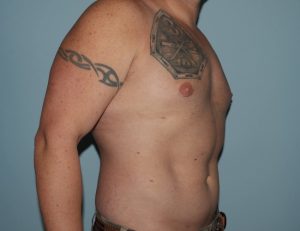
Gynecomastia refers to the enlargement of male breast tissue caused by an increase in glandular material, not fat. This condition is often triggered by a hormonal imbalance, specifically when estrogen levels increase relative to testosterone.
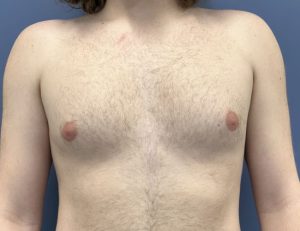
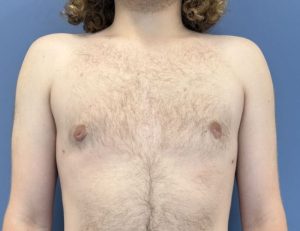
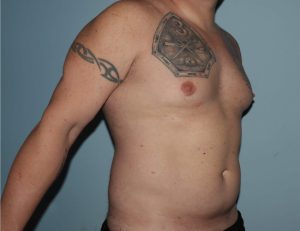
What makes gynecomastia unique is the texture. The tissue feels firm or rubbery, often located just beneath the nipple, in minor cases, but can much more extensive and almost look like a female breast. It can create a noticeable bulge and may cause sensitivity or pain. Some men also notice puffiness or uneven chest shape.
Although it commonly begins during puberty, gynecomastia can appear at any age. It may be related to medications, certain health conditions, recreational drug use, or simply age-related hormonal shifts. Regardless of the cause, the impact is often emotional as well as physical.
Men with gynecomastia frequently try to address it with exercise or diet, but these efforts rarely succeed. That’s because glandular tissue does not respond to fat-burning strategies. Some men even gain weight as it hides the distinct appearing breast tissue. Understanding this distinction is the first step toward a real solution.
What Is Chest Fat?
Chest fat, or pseudogynecomastia, is caused by the accumulation of fatty tissue in the chest area. This occurs with weight gain and aging. It is often a component of glandular gynecomastia in which case it is considered combined. While the appearance may resemble gynecomastia, the origin is is different. Treatment might include a hybrid approach with liposuction and direct excision of breast tissue or liposuction alone.
This type of chest fullness often develops with weight gain, decreased physical activity, or a loss of muscle tone. It may also be influenced by age or genetics. Unlike gynecomastia, chest fat typically feels soft and is rarely tender. The fullness is usually symmetrical and can fluctuate with changes in body weight.
Some men respond well to lifestyle changes. For others, even significant weight loss does not resolve the issue. Chest fat can be stubborn, especially when it is resistant to diet and exercise. Dr. Glenn Lyle treats many patients who are fit and active but still struggle with localized fat in the chest area. In such cases, fat reduction surgery becomes a powerful option.
How Can You Tell the Difference?
It’s not always easy to tell whether you’re dealing with chest fat or gynecomastia. Some men have a combination of both, which can further blur the lines. Mammography may help determine the relative percentage of dense breast tissue but is rarely used as a tool to determine what approach is necessary.
Gynecomastia usually presents as a firm, disk-like mass under the nipple. It may feel sore or sensitive and is sometimes uneven between the left and right sides. Chest fat, by contrast, feels soft and spreads more broadly across the chest. It typically causes no discomfort and often improves with weight loss or increased muscle tone.
Another sign is how your chest responds to body changes. If you’ve lost weight or improved your fitness but still notice fullness in the chest, this could suggest a glandular issue.
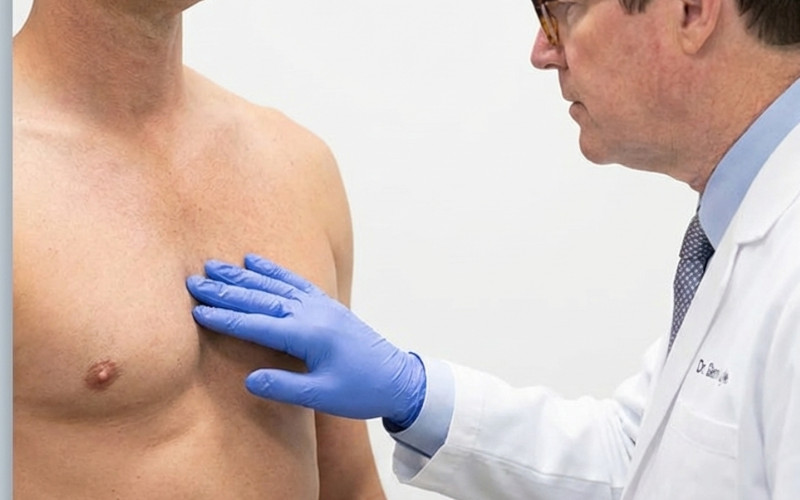
The most reliable way to know is through a clinical evaluation. Dr. Glenn Lyle performs a thorough physical exam and patient history review during consultations at his Raleigh office. He listens carefully to your concerns and uses both experience and precision to determine the true cause.
What Causes Each Condition?
Gynecomastia develops when the hormonal balance shifts, allowing estrogen to stimulate the growth of breast tissue. This imbalance can happen during puberty, as part of the aging process, or as a result of medications such as anti-androgens or antidepressants. Health conditions like liver disease or thyroid dysfunction may also contribute. Lifestyle choices, including the use of anabolic steroids or marijuana, can be triggers as well.
In contrast, chest fat accumulates due to an increase in body fat. This might result from poor dietary habits, limited physical activity, hormonal changes, or natural aging. It is not driven by breast tissue growth and does not involve hormonal stimulation.
Although they may appear similar, these two conditions come from very different origins. This is why accurate diagnosis is essential before choosing a treatment plan.
What Are the Treatment Options?
For chest fat, the first recommendation is usually a structured weight loss plan. Diet, cardio, and strength training can help reduce overall fat and improve muscle tone in the chest. However, when fat remains despite your best efforts, liposuction may be the next step.
Dr. Glenn Lyle offers VASER assisted liposuction procedures that are precise, safe, and effective. This technique removes localized fat and reshapes the chest to restore a leaner, more balanced appearance. The VASER uses ultrasound to break down fat more effectively- especially in areas like the male chest, flanks and fibrous areas. For suitable patients, it can be performed under local anesthesia with minimal downtime.
When gynecomastia is the root cause, surgical excision is required. Glandular tissue cannot be removed through liposuction alone. Dr. Lyle performs male breast reduction surgery by making a small incision around the edge of the areola. Through this access point, he carefully removes the excess glandular tissue and may use liposuction to contour the surrounding area. Some patients have excess skin which requires skin removal leading to incisions which means scars. These are unavoidable if there is a lot of loose skin. Skin tightening devices like Renuvion– may help but often even this technology can’t overcome excess skin.
Recovery from either procedure is generally quick. Most patients return to work in about a week. Exercise can usually resume after a few weeks. Wearing a compression garment helps reduce swelling and supports the healing process. Results are long-lasting and often life-changing.
What Kind of Results Can You Expect?
Surgical treatment of the chest can significantly improve both appearance and confidence. Physically, the chest becomes flatter, more contoured, and more aligned with masculine proportions. Emotionally, many patients feel relieved, proud, and free to participate in activities they once avoided.
Dr. Glenn Lyle focuses on creating natural-looking results. His approach is conservative but effective. He understands that most patients want to look like the best version of themselves, not like they’ve had surgery.
Every surgical plan is tailored. Dr. Lyle evaluates your anatomy, your goals, and your lifestyle to design a treatment that fits. His patients in Raleigh and surrounding areas appreciate his honesty, surgical skill, and commitment to delivering results that last.
Why Choose Dr. Glenn Lyle in Raleigh, NC?
Dr. Glenn Lyle is a highly respected board-certified plastic surgeon with over 30 years of experience. Based in Raleigh, NC, he has built a reputation for excellence in breast and body contouring procedures, including male chest reshaping.
His practice is centered on personalized care. There are no rushed consultations or generic solutions. Every patient receives individual attention, clear explanations, and a treatment plan rooted in both science and artistry.
Dr. Lyle uses advanced surgical techniques and operates in a fully accredited facility. He places a strong emphasis on safety, comfort, and patient education. His results reflect not only technical expertise but also a deep respect for the trust each patient places in him.
Whether your concern is chest fat or gynecomastia, you can feel confident that you are in the hands of a surgeon who understands both the physical and emotional aspects of your journey.

Meet Dr. Glenn Lyle
Board Certified Plastic Surgeon
Dr. Glenn Lyle, a board-certified plastic surgeon, has been proudly serving the Raleigh, NC, community at Lyle Plastic Surgery and Aesthetics Center since 2002. With a deep passion for helping patients reclaim their confidence, Dr. Lyle specializes in transformative breast surgery and body contouring procedures. Whether addressing the effects of weight loss, pregnancy, or aging, his expert care and artistic approach empower individuals to look and feel their best. Dr. Lyle is dedicated to creating beautiful, natural results that reflect each patient’s personal journey and goals.
FAQs: Chest Fat vs Gynecomastia
Can gynecomastia be temporary if caused by stress or poor sleep?
Yes, chronic stress and sleep deprivation can affect hormone levels, which may contribute to mild gynecomastia. However, this is rare and usually resolves once hormonal balance is restored.
Is it possible to have gynecomastia in just one breast?
Absolutely. Unilateral gynecomastia is quite common and often more noticeable, which can make it even more emotionally distressing for patients.
Does nipple size or shape change with gynecomastia?
It can. Some men notice that the nipple becomes puffy or protrudes more because of the gland pushing from underneath.
Can gynecomastia affect very lean, athletic men?
Yes. Even men with low body fat and visible abs can develop gynecomastia if there is a hormonal imbalance or a history of anabolic steroid use.
Is it normal for chest fat to increase even if your weight stays the same?
Yes, especially with age. Hormonal changes and muscle loss can shift fat storage to the chest even when overall body weight remains stable.
Can intense chest workouts make gynecomastia look worse?
They can. Developing chest muscles underneath glandular tissue can push the tissue outward, making the chest appear more prominent.
Is there a difference in temperature when touching gynecomastia versus chest fat?
Some patients report that glandular tissue feels warmer and firmer, while fat feels cooler and softer. This observation is not reliable for diagnosis but is occasionally noted.
Can gynecomastia go away after stopping marijuana or certain medications?
It can, but only in early stages when the tissue is still responsive. Once fibrous tissue forms, surgery is usually required for correction.
Does posture influence the appearance of chest fat or gynecomastia?
Yes. Slouching can make chest fullness look more pronounced, while proper posture may help the chest appear flatter.
Can you feel the difference between fat and gland by pinching your chest?
Sometimes. Fat usually feels soft and movable, while glandular tissue feels firmer and more anchored under the nipple. An in-person exam by a surgeon is still the most accurate method.
You’re Not Alone
If you’ve been living with chest fullness that bothers you, now is the time to seek answers. Many men try to ignore the issue or hope it will resolve on its own. Others feel embarrassed to ask for help. These are understandable feelings, but they should never stand in the way of feeling comfortable in your body.
You are not alone. And you do not have to settle for discomfort or uncertainty.
Dr. Glenn Lyle has helped countless men in Raleigh, NC and beyond reclaim their confidence through skilled diagnosis and customized treatment. His approach is thoughtful, respectful, and results-driven.
Take the First Step Toward Confidence
If you are ready to address unwanted fullness in your chest, schedule a private consultation with Dr. Glenn Lyle today by calling 919-307-8585. As a board-certified plastic surgeon with decades of experience, Dr. Lyle offers trusted care to patients in Raleigh and across North Carolina.
Visit drglennlyle.com to take the first step toward a more confident, comfortable version of yourself.
Further Reading
- Read Dr Glenn Lyle’s Blog on Different Types of Gyno – Glandular vs. Fatty Tissue Gynecomastia
- Read Dr Glenn Lyle’s Blog on Solutions for a Male Sagging Chest
- Read Dr Glenn Lyle’s Procedure Page on Procedures For Men

