

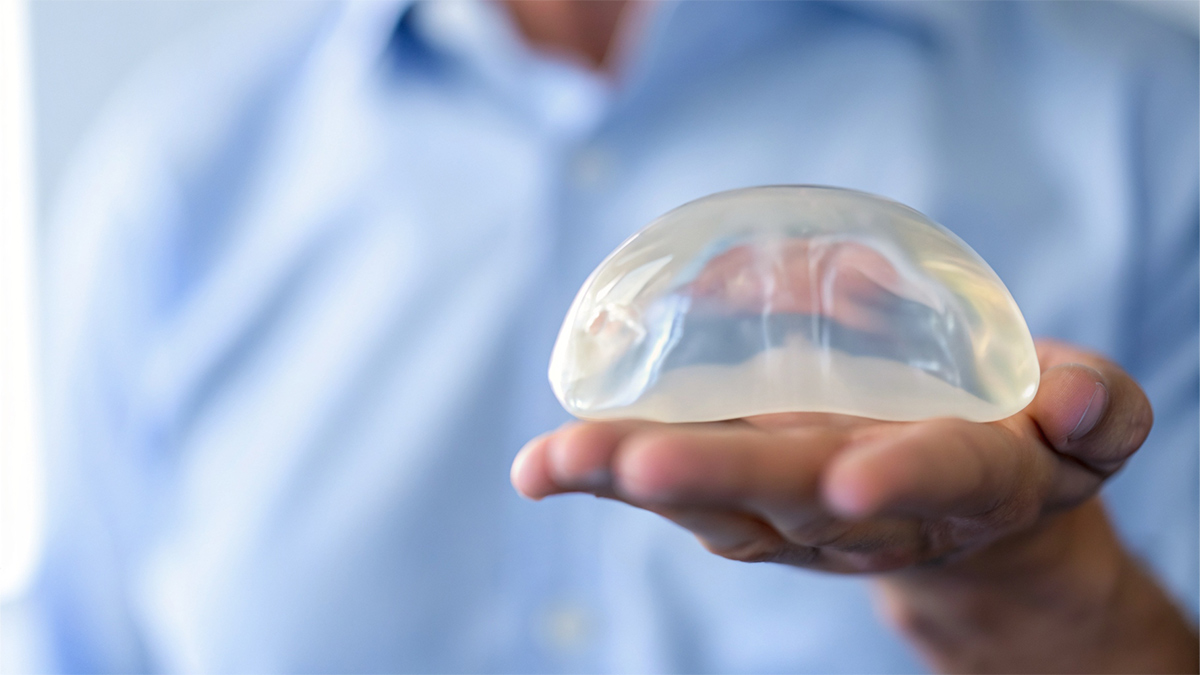
Author: Dr. Glenn Lyle
Expert Insight from Dr. Glenn Lyle, Board-Certified Plastic Surgeon in Raleigh, NC
Breast augmentation can be life-changing. It reshapes your figure, boosts confidence, and offers long-term satisfaction. But some women begin to notice changes in their implants: not in size or shape, but in the texture or appearance of their breasts. The a frequent concern? Rippling.
This issue isn’t dangerous, but it can leave patients frustrated. It affects how breasts look and feel, especially in certain positions or clothing. Whether your implants were placed years ago or recently, it’s possible for rippling to appear; the good news is, it can often be corrected.
Dr. Glenn Lyle, a leading plastic surgeon in Raleigh, NC, regularly helps women address breast implant rippling with advanced revision techniques, fat grafting, and implant replacements. His approach is clear, personalized, and grounded in achieving natural-looking results.
Understanding Breast Implant Rippling: What Does It Look Like?
Rippling refers to visible or palpable wrinkles or folds in the implant surface that can be seen through the skin or felt during movement. Most women notice it:
- Along the outer sides of the breasts
- Near the cleavage when leaning forward
- Under the arms or lower pole of the breast
These folds can be subtle or very noticeable, depending on the thickness of your skin and tissue. In most cases, the breast feels uneven, especially in positions where the implant shifts slightly.
What Causes Breast Implant Rippling?
Rippling isn’t always preventable. It’s often a combination of the implant type, placement, and the patient’s own anatomy. Here are several contributing factors:
- Saline vs. Silicone
Saline implants, especially older or underfilled ones, tend to ripple more. The fluid inside shifts easily, allowing folds to develop. Silicone implants, especially cohesive gel options, are more stable and hold their shape better. With time, implant pockets stretch creating more space for the implant resulting in more apparent ripples or folds.
- Placement Above the Muscle
When implants are placed directly under the breast tissue (subglandular), there’s less coverage. This is common in very lean women or in older surgeries. Without enough muscle or fat between the implant and skin, the implant surface can show through.
- Thin Skin and Low Body Fat
Patients with a lower body fat percentage or thin breast tissue are more likely to see or feel ripples. Dramatic weight loss or changes after pregnancy can also thin the skin over time, revealing implant contours that weren’t visible before.
- Aging Implants
Implants don’t last forever. Older implants may shift, lose volume, or form small collapses in their structure. Combined with capsular changes, these shifts can cause visible distortion.
Is Rippling Dangerous?
No. Rippling is a cosmetic issue, not a medical emergency. It doesn’t indicate rupture, infection, or significant deformity. But that doesn’t mean it should be ignored.
Many women who experience rippling feel self-conscious or dissatisfied. It can affect intimacy, body image, and comfort in certain clothing.
At Dr. Glenn Lyle’s practice in Raleigh, NC, many patients seek revision not because something is “wrong”, but because they want to feel right in their own body again.
What Are the Solutions?
There’s no one-size-fits-all answer. Dr. Glenn Lyle carefully evaluates each patient’s anatomy, implant history, and aesthetic goals before recommending a solution. Options include:
✓ Fat Grafting
Dr. Lyle uses autologous fat transfer, taking fat from areas like the abdomen or thighs and injecting it around the implant. This adds a soft layer of natural padding, reducing visibility and improving feel.
This is a great choice for patients with thin tissue or visible implant edges but no desire to change their implant size. It also enhances body contour in donor areas.
✓ Implant Replacement
If the implant is old, poorly filled, or saline-based, replacing it with a modern silicone gel implant may reduce rippling immediately. A firmer fill and smoother contour help avoid folds and shifting.
Implant size and profile may also be adjusted. Some women benefit from a slightly larger implant with more structure, while others do better with a smaller implant paired with support techniques.
✓ Pocket Revision and Muscle Coverage
For implants placed above the muscle, revision surgery can move the implant beneath the muscle (dual-plane placement), adding extra coverage. This method significantly reduces the chance of rippling, especially in the upper pole.
Dr. Lyle often uses this technique in revisions to improve both implant support and visual results.
✓ Internal Bra or Mesh Support
In more complex cases, Dr. Lyle may use surgical mesh to create an internal scaffold that holds the implant in a more stable position. This reinforces weakened or stretched tissue and prevents bottoming out, which is another cause of rippling.
Materials like Galaflex, DuraSorb or OviTex or Strattice provide long-term support and are absorbed by the body over time.
Who’s a Good Candidate for Correction?
You may benefit from treatment if:
- You see wrinkles or waves in the implant when you lean forward
- You feel folds when you touch the side or bottom of your breast
- You’re unhappy with the way your implants look or feel
- You’ve experienced weight changes or aging since your original surgery
- You had implants placed above the muscle and have thin skin
Dr. Glenn Lyle offers personalized consultations at his Raleigh office. Patients come from Cary, Chapel Hill, Durham, and beyond to seek his expertise in breast revision surgery.
What to Expect From Your Consultation
At your first visit, Dr. Lyle will:
- Review your implant type, placement, and surgical history
- Assess your tissue quality, skin elasticity, and body shape
- Use Crisalix 3D imaging to simulate possible improvements
- Recommend options tailored to your goals and anatomy
Not every case requires surgery. Sometimes, small changes in bras or body weight can reduce the appearance of rippling. But if a procedure is the best path forward, Dr. Lyle provides honest, detailed guidance about cost, recovery, and results.
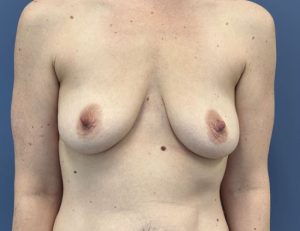
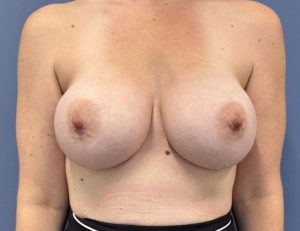
Breast Augmentation Before and After Photos


Common Myths About Implant Rippling
Breast implant rippling can feel confusing and even disappointing, even more so if you weren’t warned about the possibility before surgery. Misunderstandings about what it is, why it happens, and how it can be improved often keep women from seeking help. Here’s what you should know.
Myth 1: Rippling Means Something Went Wrong
It’s natural to assume that rippling is a surgical mistake or sign of failure. In reality, it often occurs in completely normal, well-healed implants, especially in thin patients or when implants are placed above the muscle.
Myth 2: Only Saline Implants Ripple
Saline implants are more prone to visible folds, but silicone implants aren’t immune. Even high-quality silicone implants can ripple if there isn’t enough tissue to cover them, especially in patients with low body fat.
Many patients are surprised to learn that even newer silicone models can ripple in the wrong setting. Implant selection is just one part of the equation.
Myth 3: If You Have Rippling, You Need a Bigger Implant
More volume isn’t always the answer. Adding a larger implant to “fill out” rippling can actually make the problem worse: stretching tissue further and increasing the chances of visibility.
A thoughtful solution might include fat grafting, implant repositioning, or switching implant type, all of which can improve contour without simply sizing up.
Myth 4: Rippling Can’t Be Fixed Without Starting Over
Correcting rippling doesn’t always require a full implant replacement. In many cases, adding volume through fat grafting, adjusting the pocket, or repositioning the implant under the muscle can dramatically improve appearance.
Dr. Glenn Lyle often sees women who were told “nothing could be done”, only to discover that a skilled, detail-oriented revision can restore their confidence.
Myth 5: It’s Just Something You Have to Live With
Some patients were told early on that rippling was “normal” or “inevitable.” That doesn’t mean it should be dismissed. If it bothers you – even if it’s not considered a complication – you deserve to explore your options.
Many women live with rippling longer than they need to because they didn’t think a fix was possible or worthwhile. Dr. Lyle’s revision consultations often begin with the words, “I didn’t think anyone could help.”
What Recovery Looks Like
One of the first questions patients ask after discussing surgery is, “How long will I be out of commission?” That’s a natural concern. Recovery affects your body, your schedule, and your peace of mind.
Dr. Glenn Lyle provides each patient with a custom recovery plan. From the moment you leave the operating room, his focus is on keeping you comfortable, informed, and supported every step of the way.
Recovery Timelines Based on the Procedure
Recovery varies depending on what’s being corrected.
- Fat Grafting Only
- Patients who undergo fat transfer without implant revision usually experience minimal downtime.
- Most return to light activity within 2 to 3 days; regular routines often resume within 2 to 3 weeks.
- Expect some soreness at the donor site, such as the abdomen or thighs, and mild tenderness in the breasts.
- Implant Revision Surgery
- Most women take 5 to 7 days off work, with full activity resuming in 4 to 6 weeks.
- Swelling, tightness, and shape changes continue to settle over several months.
- Internal Bra or Mesh Support
- This requires a more gradual approach.
- Lifting, stretching, and high-impact movement should be avoided for at least 4 to 6 weeks.
- Support bras and compression garments help maintain implant position and control swelling.
- Regular check-ins with Dr. Lyle help monitor progress and adjust care as needed.
What You’ll Feel: Normal Sensations and Reactions
You may notice:
- Tightness or pressure across the chest
- Swelling or puffiness
- Mild bruising
- Soreness in the liposuction area if fat grafting was used
- Shifting emotions, including periods of low energy or impatience as you wait for results
These responses are expected. Most patients find the discomfort very manageable, especially with the pain control plan and guidance Dr. Lyle provides during each phase.
How Dr. Glenn Lyle Supports You After Surgery
Recovery is a team effort. Dr. Lyle’s patients in Raleigh, NC, receive:
- Step-by-step written instructions for the first 6 weeks
- Access to his staff for any questions, large or small
- Follow-up visits to track healing, answer concerns, and adjust your care as needed
- Scar management tools such as silicone strips, LED light therapy, or scar creams
Healing isn’t just physical. It’s emotional, too. Many patients say the support they received made all the difference.
Why Choose Dr. Glenn Lyle in Raleigh, NC
Choosing the right surgeon matters just as much as choosing the right procedure. Dr. Glenn Lyle is a board-certified plastic surgeon with over 25 years of experience performing primary and revision breast surgery. His practice in Raleigh, NC, is built around surgical precision, patient education, and outcomes that prioritize proportion, safety, and long-term satisfaction.
Here’s what sets him apart:
Board Certification and Surgical Credentials
Dr. Lyle is certified by the American Board of Plastic Surgery, the only plastic surgery board recognized by the American Board of Medical Specialties. This certification means:
- He has completed extensive residency training in plastic and reconstructive surgery
- He passed rigorous written and oral exams in surgical skill, ethics, and patient safety
- He meets ongoing education and quality standards to maintain certification
His credentials reflect a commitment to evidence-based care and surgical best practices.
Specialization in Breast Surgery and Revision Cases
Breast implant rippling is a nuanced problem that requires experience with:
- Fat grafting techniques
- Implant selection and sizing
- Internal mesh support
- Tissue assessment
- Implant pocket adjustments
Dr. Lyle performs breast augmentations, lifts, and revisions weekly in his Raleigh practice. His surgical techniques are informed by current literature, long-term data, and real-world outcomes.
Many patients come to him after prior procedures elsewhere, seeking correction of rippling, asymmetry, bottoming out, or implant malposition. His depth of experience in both primary and revision surgery means patients receive a plan that is both realistic and tailored.
Use of High-Quality Implants and Safe Techniques
Dr. Lyle chooses smooth, round silicone implants from manufacturers with strong safety data and long-term performance. These include:
- Motiva: known for low rupture and capsular contracture rates
- Allergan and Sientra: popular for soft feel and predictable shape retention
He rarely uses textured or shaped implants, which have higher complication profiles. When needed, he supplements implant placement with fat grafting or mesh to improve coverage and stability, especially in thin patients or after weight loss.
Personalized Consultations With 3D Imaging
Dr. Lyle uses Crisalix 3D simulation software to help patients visualize changes and understand what’s achievable. This technology allows for open conversation about size, shape, and proportions based on your unique anatomy.
He doesn’t delegate the consultation – patients speak directly with him, not just a coordinator. That level of personal attention allows for:
- Accurate surgical planning
- Clear communication of expectations
- Trust from the first appointment onward
Accredited Surgical Facility and Post-Op Support
Surgical procedures are performed in a fully accredited, hospital-grade outpatient facility with:
- Experienced anesthesia professionals
- Strict infection control protocols
- A focus on safety and comfort throughout
After surgery, follow-up care continues in-house. Dr. Lyle sees every patient himself and provides detailed recovery guidance. His team remains accessible, offering continued service that patients appreciate and rely on.
Time to Feel Comfortable in Your Body Again
If you’ve noticed breast implant rippling or feel that your results no longer reflect your goals, you’re not alone. Many women experience similar concerns and find relief through expert guidance and personalized care.
Dr. Glenn Lyle, a board-certified plastic surgeon in Raleigh, NC, helps patients understand their options and regain confidence through advanced breast revision techniques. Whether the solution involves fat grafting, implant replacement, or internal support, your plan is built around your anatomy, lifestyle, and aesthetic vision.
A consultation is the first step. During your visit, you’ll have the opportunity to ask questions, explore solutions, and decide what feels right for you. Dr. Lyle provides honest recommendations in a comfortable setting with no pressure.
📍 To schedule your private consultation, visit Dr. Lyle’s Contact Page.
Reclaim your comfort. Restore your confidence. Trust your care to an experienced surgeon who listens.
Medical References
- Rippling Following Breast Augmentation or Reconstruction: Aetiology, Classification and Treatment / Aesthetic Plastic Surgery / https://link.springer.com/content/pdf/10.1007/s00266-018-1117-y.pdf
- Troell, R. J. (2025). Aesthetic primary and secondary breast augmentation. Aesthetic Surgery Journal, 45(2), 215-228. https://journals.sagepub.com/doi/abs/10.1177/07488068251314535
- Zhao, H., et al. (2024). Breast augmentation complications with three planes of implant placement. Aesthetic Plastic Surgery, 48(3), 123-13 https://www.sciencedirect.com/science/article/pii/S2096691124001080
Further Reading
-
- Read Dr Glenn Lyle’s Blog on How Motiva Differs from Other Brands – Are they Better?
- Read Dr Glenn Lyle’s Blog on What is Dual Plane Breast Augmentation?
- Read Dr Glenn Lyle’s Blog on Getting your Breast Implants Checked with a Doctor

